
Have vs Has— A1 Grammar Exercises
Published March 14, 2026
Exercise 1 — Multiple Choice
She ____ a new bicycle.
They ____ a big house.
My brother ____ a dog.
We ____ a lot of homework.
The cat ____ a toy.
You ____ a nice car.
He ____ two sisters.
I ____ a great idea.
The teacher ____ many students.
You and I ____ a plan.
You have a new phone. She has a new phone. Both sentences are correct — the verb changes depending on the subject. The rule is simple, but it is one of the first mistakes learners make in English.
The Rule
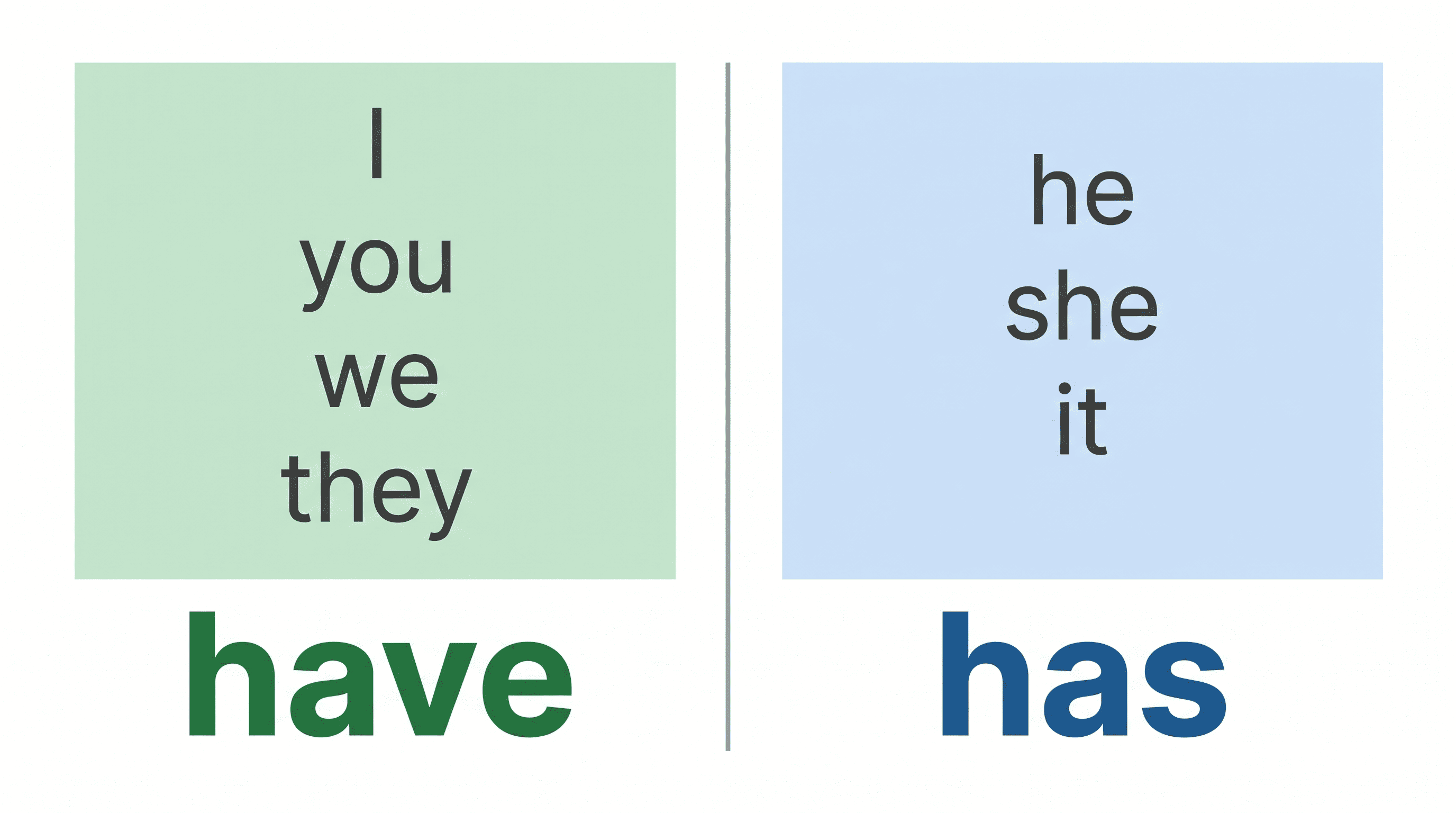
Use have with: I, you, we, they
Use has with: he, she, it
The verb to have works like the verb to be: it changes form for he, she, and it. Every other subject uses have.
Forms
| Subject | Positive | Negative | Question |
|---|---|---|---|
| I | I have a dog. | I don't have a dog. | Do I have a dog? |
| You | You have a sister. | You don't have a sister. | Do you have a sister? |
| He | He has a car. | He doesn't have a car. | Does he have a car? |
| She | She has a key. | She doesn't have a key. | Does she have a key? |
| It | It has four legs. | It doesn't have four legs. | Does it have four legs? |
| We | We have a flat. | We don't have a flat. | Do we have a flat? |
| They | They have two children. | They don't have two children. | Do they have two children? |
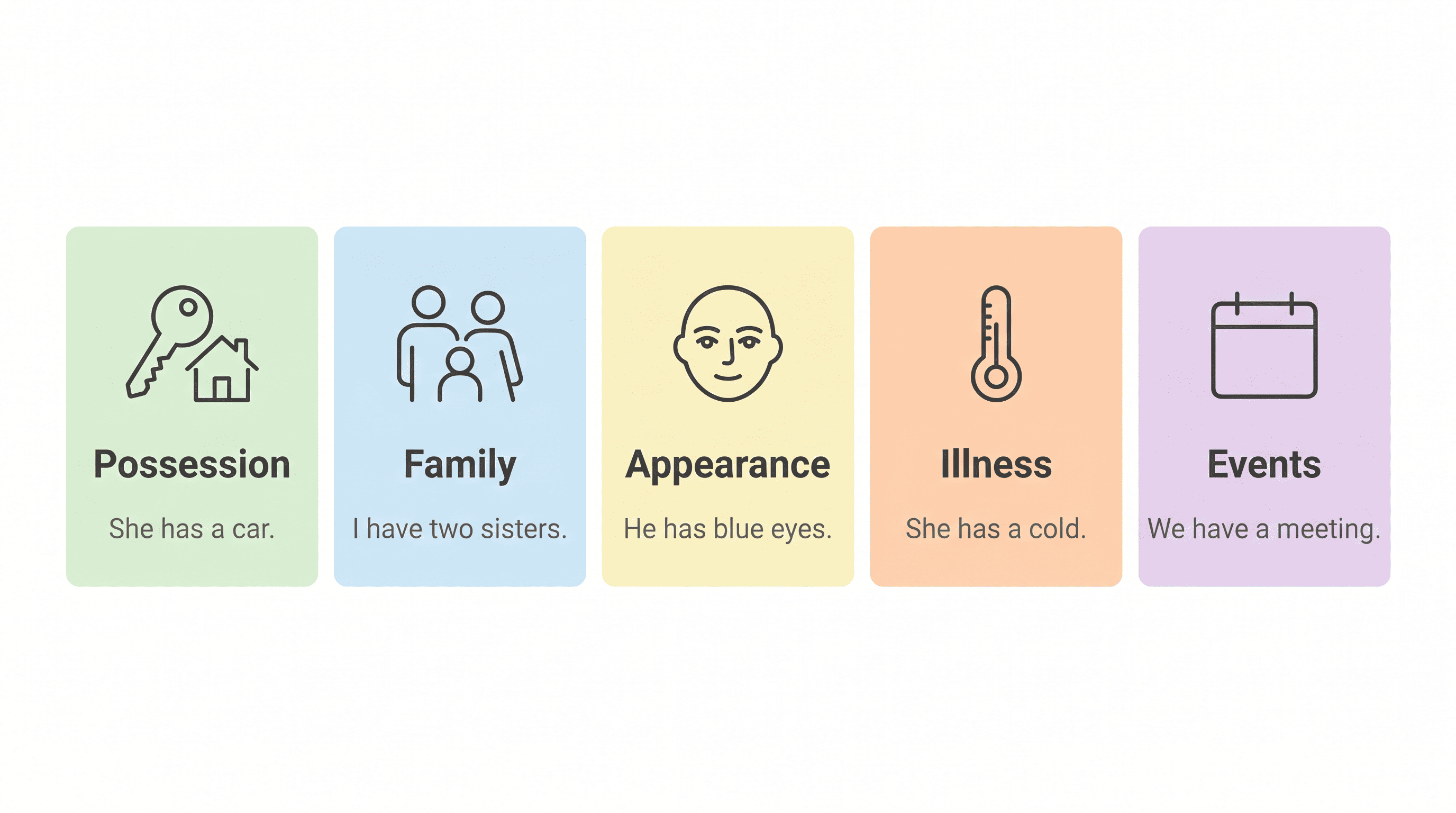
What Do We Use Have / Has For?
Possession
Use have / has to say that someone owns something.
- Tom has a new laptop.
- We have tickets for the concert.
- I have a bicycle.
- She has a lot of books.
Family and relationships
Use have / has to talk about people in your life.
- I have two brothers.
- She has a husband and three children.
- They have a cat.
- He has no friends in this city.
Physical appearance
Use have / has to describe what a person or thing looks like.
- He has brown eyes and short hair.
- The hotel has a swimming pool.
- She has glasses and a big smile.
- The dog has a white tail.
Illness and physical states
Use have / has to describe how someone feels physically.
- Maria has a headache.
- I have a cold.
- The dog has a sore leg.
- He has a temperature.
Events and situations
Use have / has for scheduled events and general situations.
- I have a meeting at three.
- She has a test tomorrow.
- We have a problem.
- The class has a new teacher.
Have Got
Common Mistakes
| ✗ Wrong | ✓ Correct | Why |
|---|---|---|
| She have a new bag. | She has a new bag. | She is third person singular. Use has. |
| He have two dogs. | He has two dogs. | He is third person singular. Use has. |
| Does she has a ticket? | Does she have a ticket? | Does already marks third person singular. The main verb returns to its base form: have. |
| It don't have a name. | It doesn't have a name. | It is third person singular. The negative auxiliary must also be doesn't, not don't. |
| My father have a big car. | My father has a big car. | My father = he. Any singular noun phrase uses has. |
| The school have a garden. | The school has a garden. | The school = it. Places and things are third person singular. |
Names and Noun Phrases as Subjects
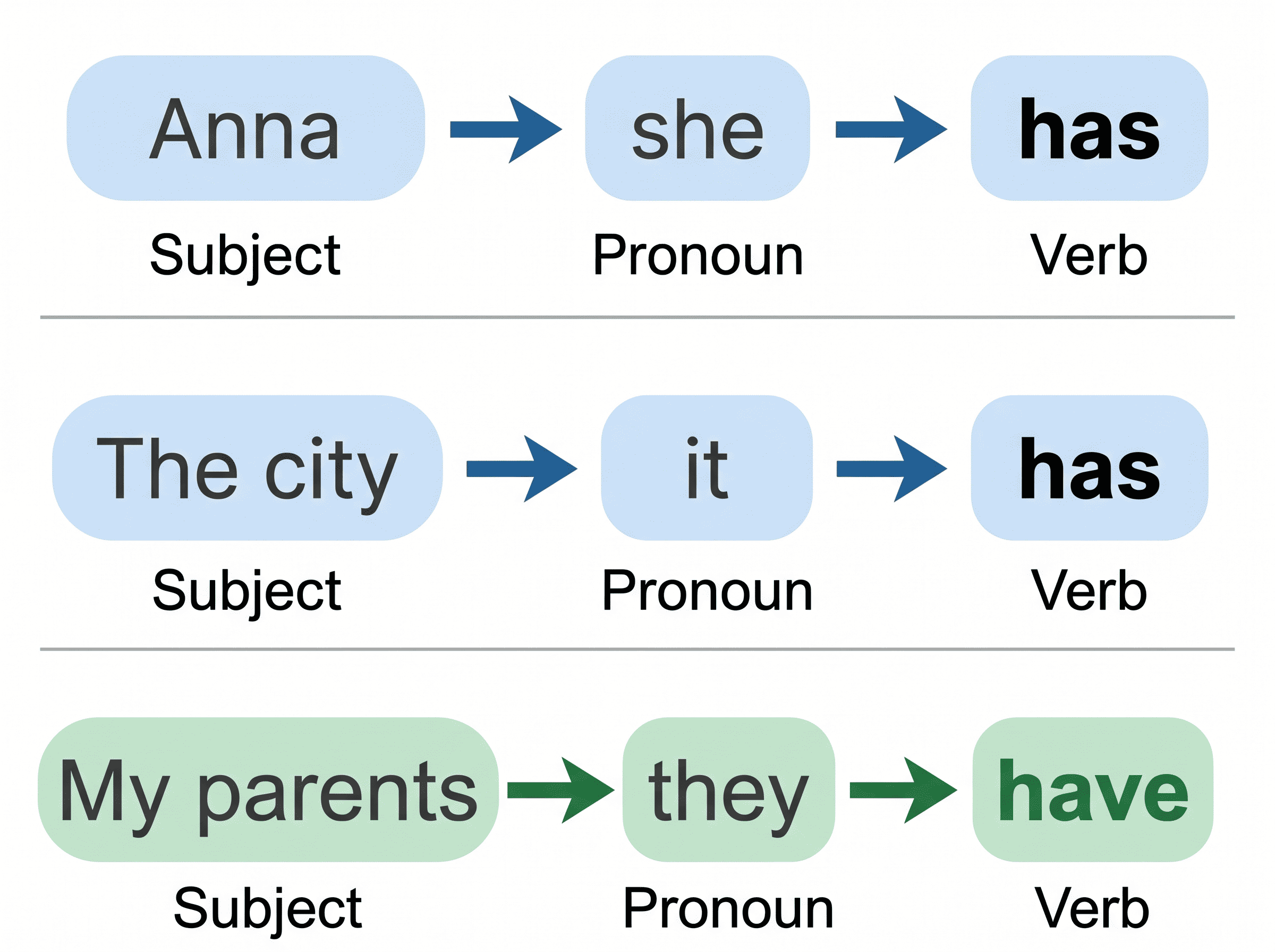
A name or noun phrase is not a pronoun, but the same rule applies. If you can replace the subject with he, she, or it, use has. If you can replace it with they, use have.
Anna has a red bike. → She has a red bike. (she → has ✓)
The city has a big park. → It has a big park. (it → has ✓)
My parents have a cat. → They have a cat. (they → have ✓)
Knowing which pronoun replaces a subject is key. Review subject and object pronouns if you are not sure.
Frequently Asked Questions
When do you use "has" instead of "have"?
Use has with he, she, and it — and with any singular noun that can be replaced by one of these. Every other subject — I, you, we, they — uses have.
Why do we say "does she have" and not "does she has"?
The auxiliary verb does already carries the third person singular meaning. The main verb after an auxiliary always returns to its base form — so it is does she have, not does she has. The same pattern applies to other verbs: does she like, does she know.
Is it "my family has" or "my family have"?
In standard grammar, my family has is correct. Family is a singular noun, so it takes has. In informal British English, collective nouns like family or team can take a plural verb — but for grammar tests, use my family has.
What is the negative form of "have" and "has"?
The negative of have is don't have (full form: do not have). The negative of has is doesn't have (full form: does not have). In both negatives, the main verb is always have.
How do I use "have" and "has" in questions?
Put the auxiliary before the subject: Do you have…? and Does she have…? The main verb stays as have in both. Short answers use the auxiliary alone: Yes, she does. / No, I don't.
What is the difference between "have" and "have got"?
In British English, have got and have mean the same thing for possession and characteristics. I have a car = I've got a car. Have / has is standard in all varieties of English and in formal writing; have got is more common in informal British speech. Both are correct at A1 level.
Quick Summary
- Use have with I, you, we, they.
- Use has with he, she, it — and with any singular noun that means one person or thing.
- In negatives: don't have (I/you/we/they) and doesn't have (he/she/it). The main verb is always have.
- In questions: Do you have…? and Does she have…? — the main verb is always have, not has.
- Use have / has for possession, family, appearance, illness, and events.
- If you can replace the subject with he / she / it, use has. If you can replace it with they, use have.
Related Topics
- The verb to be — another verb that changes form for different subjects
- Subject and object pronouns — essential for choosing have or has correctly
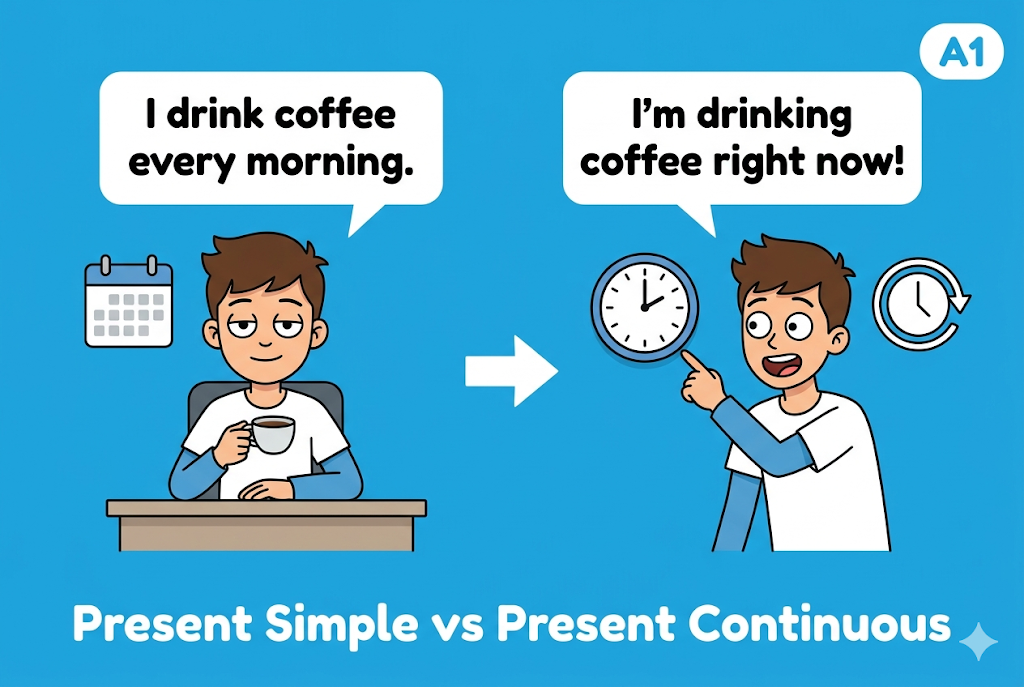
- Present simple vs present continuous — the next step in A1 verb forms
Comments